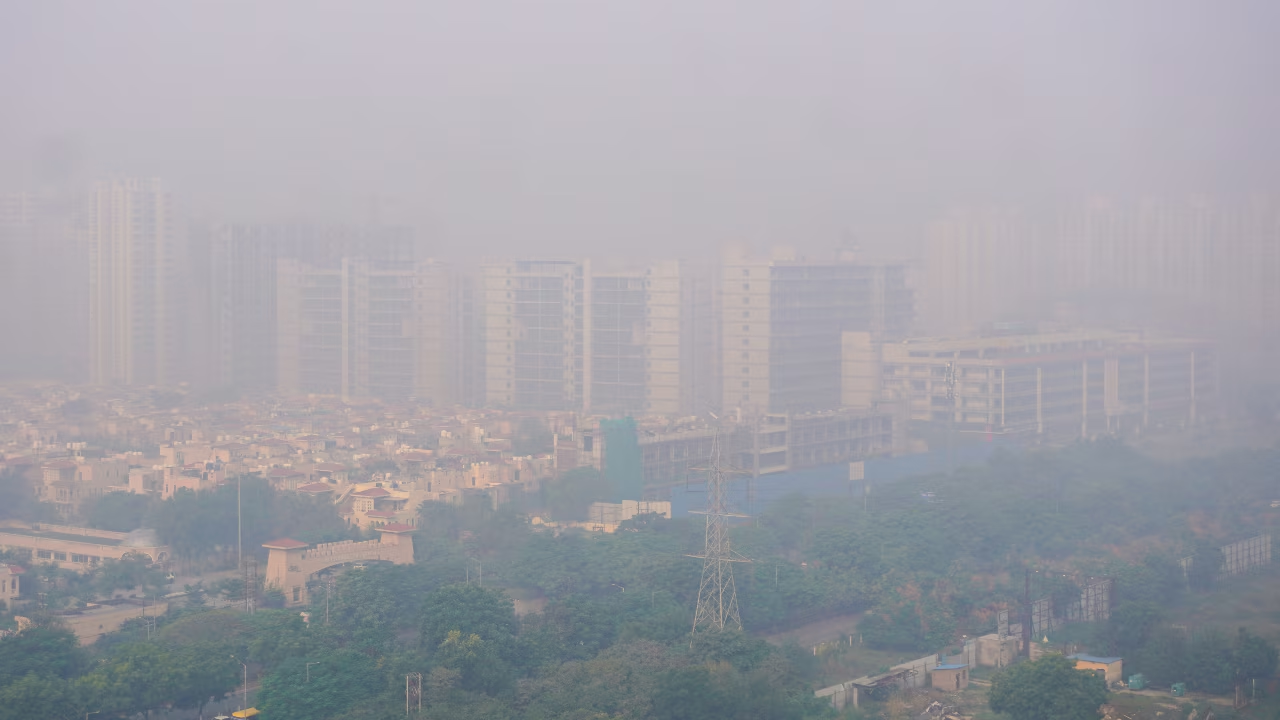

Delhi’s air quality remained in the ‘Very Poor’ category for the fourth consecutive day, with forecasts warning of ‘Severe’ pollution over the weekend, rising vehicle emissions, construction dust and stubble burning continue to worsen the situation across Delhi-NCR.
Share Article
https://www.india.com/news/india/delhi-air-pollution-aqi-today-nov-6-latest-update-remains-above-350-for-fourth-day-worse-air-expected-on-diwali-weekend-check-forecast-8542596/
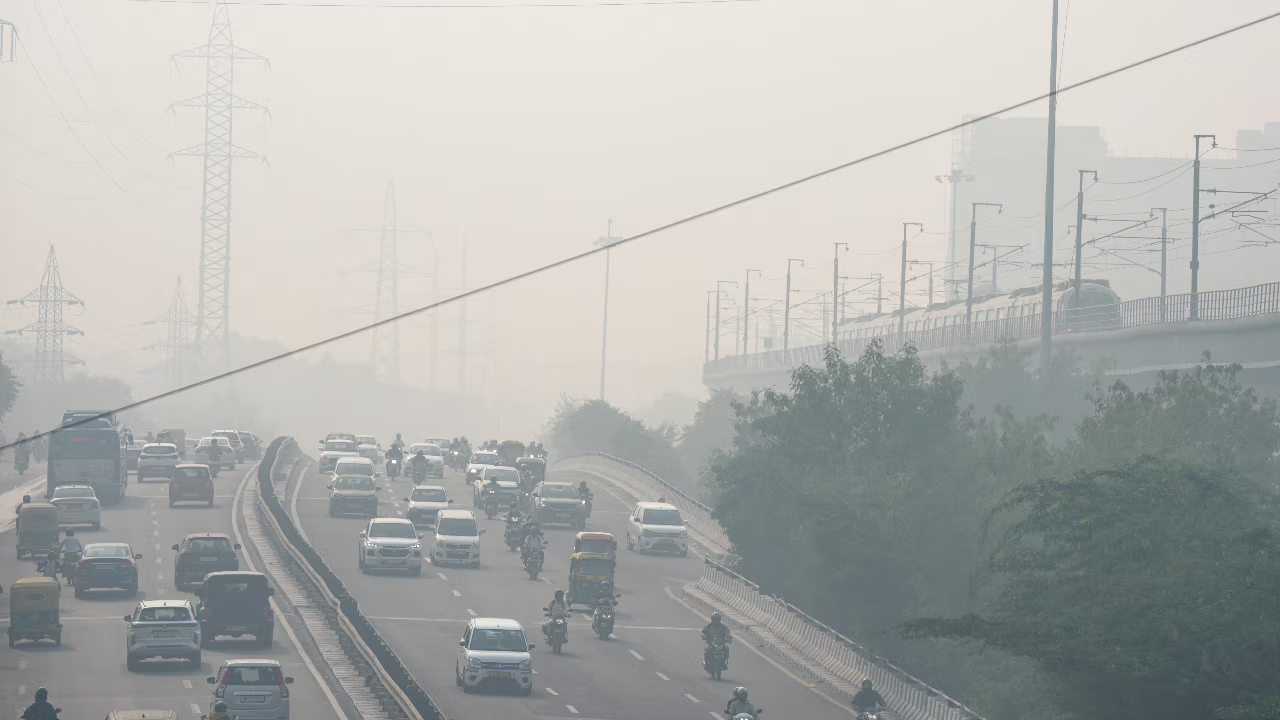
Commuters pass by amid poor air quality, at Jasola, in New Delhi (PTI)
Delhi’s air quality has started deteriorating again after the national capital recorded its cleanest October average in eight yearsPollution levels remained in the ‘Very Poor’ category for the fourth consecutive day on Thursday, November 5, raising concerns about another spell of toxic air ahead of DiwaliAccording to the Central Pollution Control Board (CPCB), Delhi recorded an average Air Quality Index (AQI) of 369 at 4 pm on ThursdayAlthough this was slightly lower than Wednesday’s reading of 377, pollution levels remained dangerously high across several parts of the cityThe situation was similar in neighbouring NCR citiesGurugram recorded an AQI of 339, while Noida registered 283, according to CPCB data.
The coming days could bring further trouble for residents as weather and pollution forecasts have warned of a possible rise in pollution levelsThe Indian Institute of Tropical Meteorology (IITM) has predicted that Delhi’s air quality could enter the ‘Severe’ category from Friday, November 6, and remain between ‘Severe’ and ‘Very Poor’ over the following days.
Delhi AQI: 22 monitoring stations record severe air quality
Several parts of Delhi continued to report extremely high pollution levels on ThursdayOf the 59 active air quality monitoring stations in the city, 22 recorded AQI readings in the ‘Severe’ category by 10 pm.
Punjabi Bagh recorded the highest AQI at 459It was followed by Jahangirpuri at 457, Rohini at 453, IIT Delhi at 452 and Delhi Technological University (DTU) at 443.
The city’s average AQI has also remained above 300 since the beginning of the weekIt stood at 324 on Monday, increased to 350 on Tuesday and climbed further to 377 on Wednesday before settling at 369 on Thursday.
Under the CPCB’s classification, an AQI between 301 and 400 falls in the ‘Very Poor’ category, while readings between 401 and 500 are considered ‘Severe’.
Why is Delhi’s pollution increasing despite fewer farm fires?
The rise in pollution levels has continued even as the number of stubble-burning incidents in Punjab, Haryana and Uttar Pradesh has remained relatively lower than in previous years.
Experts say farm fires are only one part of Delhi’s pollution problemDust from roads and construction sites, vehicle emissions, industrial activities and pollution from household sources are also adding to the city’s worsening air quality.
Weather conditions are making the situation more difficultFalling temperatures, slower wind speeds and poor movement of air prevent pollutants from spreading, allowing harmful particles to remain trapped close to the ground.
According to the IITM’s Decision Support System (DSS), stubble burning contributed around 15.6 per cent to Delhi’s PM2.5 pollution on ThursdayIts share was expected to increase to 19.2 per cent on Friday.
However, farm fires are not expected to remain the biggest concern throughout the weekendThe DSS estimates that the contribution of stubble burning could fall sharply to around 1.6 per cent on Saturday, while the share of vehicle emissions could rise to 21.1 per cent.
Punjab records highest number of stubble-burning incidents
Meanwhile, satellite data continued to detect several cases of crop residue burning across northern and central IndiaAccording to the Indian Agricultural Research Institute (IARI), satellites detected 837 paddy residue-burning incidents on ThursdayPunjab accounted for the highest number, with 440 cases.
Madhya Pradesh reported 216 incidents, followed by Rajasthan with 90, Uttar Pradesh with 64, Haryana with 18 and Uttarakhand with nine.
Since September 15, a total of 5,637 farm-fire incidents have been recorded this season, according to the figures cited in the report.
Officials in Punjab have also warned that the number of farm fires could rise furtherUnseasonal rainfall delayed the paddy harvesting process in several parts of the state, leaving farmers with more crop residue to manage.
This could add to the pollution burden in Delhi-NCR if more farmers resort to burning leftover straw in their fields.
GRAP Stage II measures already in force in Delhi-NCR
With pollution levels rising, anti-pollution measures under Stage II of the Graded Response Action Plan (GRAP) have already been implemented across Delhi-NCR. The measures include more frequent mechanical cleaning of roads, water sprinkling to control dust, stricter checks at construction sites and steps to reduce traffic congestion.
Authorities have also taken measures to encourage people to use public transport instead of private vehiclesThe Delhi Metro has added 20 additional train trips on weekdays to help manage the rush and reduce dependence on private transport.