



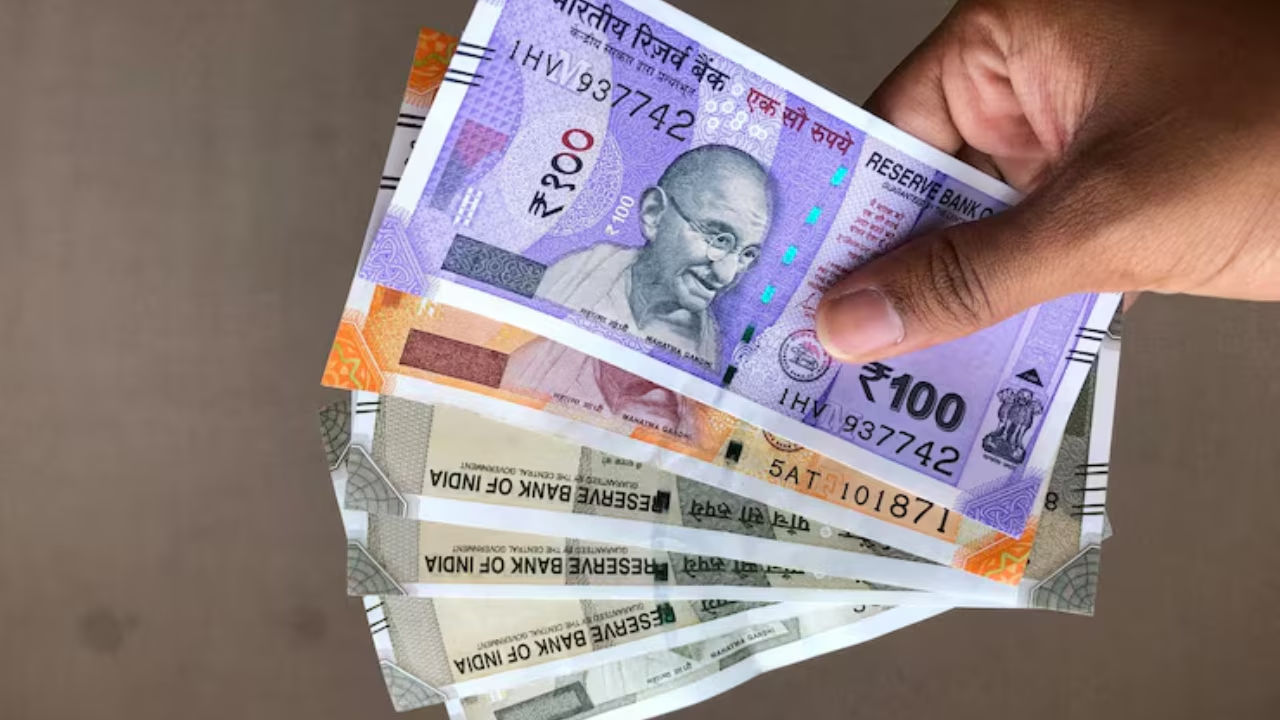
Security agencies have received credible inputs suggesting that Pakistan’s Inter-Services Intelligence (ISI) is planning to increase the circulation of fake Indian currency, especially in lower denominations.
Published: August 7, 2026, 2:41 PM IST
Share Article
https://www.india.com/news/india/fake-rs-10-rs-20-notes-to-flood-indian-markets-intelligence-agencies-warn-of-new-isi-backed-counterfeit-strategy-on-low-value-notes-organised-crime-networks-8495428/
तो क्या बंद हो जाएगी कागज की करेंसी?
Indian security agencies have noticed a major change in the way fake currency is being circulated across the countryAccording to reports, criminal groups that have been involved in counterfeit money for years are now changing their strategyOfficials say organised crime networks, including the one linked to Dawood Ibrahim, have long been involved in smuggling fake Indian currencyThese operations are believed to have received support from Pakistan’s Inter-Services Intelligence (ISI), making counterfeit money one of the syndicates’ major sources of illegal income.
Earlier, these networks mainly circulated fake Rs 200 and Rs 500 notesHowever, investigators have found that the number of fake Rs 500 notes has dropped significantly in recent months.
Instead, authorities say the focus has shifted to lower-value notesFake Rs 10, Rs 20 and Rs 50 notes are now being found more frequently in different parts of the country, suggesting that the networks have changed their method of operation.
Security agencies warn that fake currency does more than help criminal organisations earn moneyIt can also affect the country’s financial system and create economic problemsOfficials believe this is one of the reasons why the illegal counterfeit trade continues to receive support, with investigators alleging that much of the operation is linked to the Dawood Ibrahim network and backed by Pakistan’s ISI.
An Intelligence Bureau (IB) official told IANS that security agencies have received credible inputs suggesting that Pakistan’s Inter-Services Intelligence (ISI) is planning to increase the circulation of fake Indian currency, especially in lower denominations.
According to the official, the focus has shifted to fake Rs 10, Rs 20 and Rs 50 notes, which are expected to be pushed into the market in much larger numbers than before.
The official said the strategy is based on a simple reasonPeople are usually very careful while accepting Rs 200 or Rs 500 notes and often check them closelyHowever, they rarely examine smaller denomination notes, making them easier for counterfeiters to circulate without attracting attentionThey believe criminal networks are trying to take advantage of this habit by flooding the market with fake low-value notes that can easily pass through everyday transactions.
Another official said the period leading up to April 2027 will be especially important, as agencies expect these syndicates to increase the circulation of counterfeit small-denomination notes during this time.
Officials linked this to the Reserve Bank of India’s plan to introduce polymer, or plastic, banknotes in Rs 10 and Rs 20 denominations by 2028These new notes are expected to last much longer than paper currency and come with stronger security features that make counterfeiting far more difficult.
The polymer notes will include advanced security elements such as transparent windows, special metallic features and micro-optic holograms, which are much harder to copy than those used on paper notes.
Security agencies suspect that before these new notes are introduced, ISI-backed counterfeit networks may try to circulate as many fake low-value notes as possible.
Officials also believe that once the new polymer notes are in circulation, these groups may shift their attention to higher denominations such as Rs 50 and Rs 100 notes instead of focusing mainly on fake Rs 500 notes.
(With IAND inputs)