
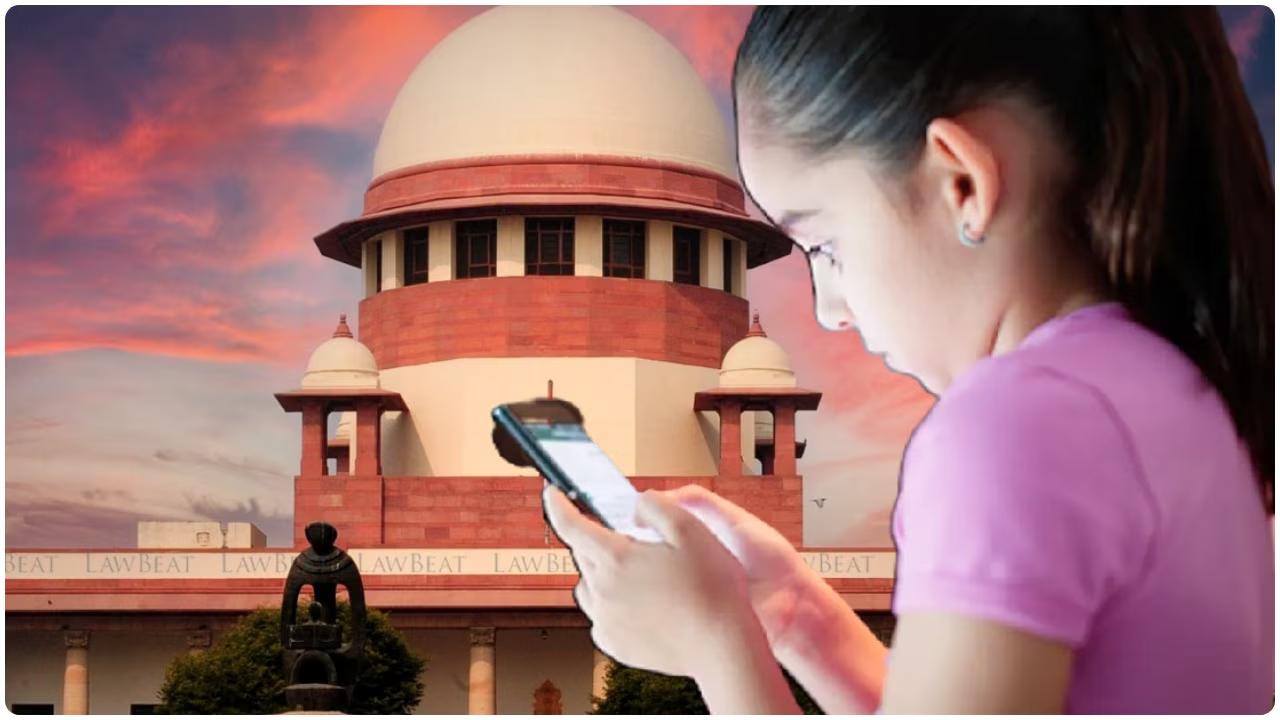
The Supreme Court said that children’s safety and freedom to use the internet were not at odds with each other.
Published: October 17, 2026, 5:05 PM IST
Share Article
https://www.india.com/news/india/supreme-courts-big-decision-on-internet-access-rejects-age-based-ban-calls-internet-a-fundamental-right-for-all-including-children-8536893/
Supreme Court’s big decision on Internet Access: Rejects age-based ban, calls internet a fundamental right for all, including children
SC Rejects Age-Based Restrictions On Internet Access: Taking a major decision, the Supreme Court on Saturday rejected blanket age-based restrictions on internet access, observing that children enjoy the fundamental right to use the internetThe top court also called for a stricter structure to protect kids from online sexual abuse, including detection and removal of child sexual abuse content across platformsThe court said that the right to access internet is a fundamental right for everyone, including children, under Articles 21 and 19(1)(a) of the Constitution.
What Did The Supreme Court Say?
The bench, including Justices JB Pardiwala and K Vinod Chandran, suggested that instead of restricting kids from using internet, measures should be taken to protect their online safetyThe bench said measures such as “child mode” for social media platforms can be implemented.
Read more:
Bad news for Mukesh Ambani, BSNL as Airtel launches new plan under Rs 100 with unlimited…
During the hearing, the bench directed to strengthen the mechanism for removal of child sexual exploitation and abuse material (CSEAM) from online services, including social media platforms.
Children Should Have Both Security and Freedom
“We have no hesitation in holding that access to and use of the Internet is a fundamental right of every individual under Article 21 and Article 19(1)(a) of the ConstitutionOur children, regardless of their age, have the same rightsDenying them these rights would be as absurd as saying that children below a certain age have neither the intelligence that should be protected nor the freedom of expression that should be expressedThe safety of our children and their freedom are not in conflictOur children should have both,” the bench said.
Imposing Restrictions Is Not The Right Solution
The bench observed that the internet, in its current form, is very harmful for children and poses a risk to their safetyHowever, the court said that restricting kids from online platforms for failing to remove harmful content is like blaming victims instead of solving the root of the problem.
Describing the advantages of internet, the bench said it is a marketplace for ideas and information, and its significance is not limited to the contentIt said the internet provides opportunities for learning, interaction and access to information.
“For many children, especially in remote areas, it is often the only means of learning and information,” the court said.
The country’s top court noted that the Internet can be very beneficial for kids with special needsFor these kids, internet may be the only place where they can find and meet other people who are dealing with similar circumstances.