

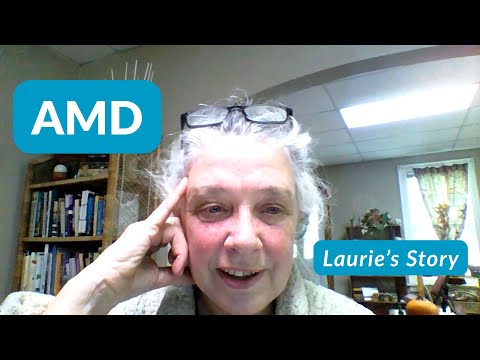
According to Johns Hopkins Medicine, AMD is the most common cause of severe loss of eyesight among people 50 and older. And, about 4 million Americans live with low vision, which is defined as chronic visual impairment that cannot be corrected with glasses, contact lenses or medical treatments.
AMD affects the central part of the retina called the “macula.” When AMD damages the macula, the center part of a person’s vision may become blurred or wavy, and a blind spot may develop. Early detection and treatment of AMD is key to helping to prevent significant vision loss.
Two types of AMD include:
Founded in 1908, Prevent Blindness is the nation’s leading volunteer eye health and safety organization dedicated to fighting blindness and saving sight. Focused on promoting a continuum of vision care, Prevent Blindness touches the lives of millions of people each year through public and professional education, advocacy, certified vision screening and training, community and patient service programs and research. These services are made possible through the generous support of the American public. Together with a network of affiliates, Prevent Blindness is committed to eliminating preventable blindness in America. For more information, visit us at PreventBlindness.org, and follow us on Facebook, X, Instagram, LinkedIn, TikTok and YouTube. SOURCE Prevent Blindness
- Dry– The most common form of AMD, dry AMD, is caused by the appearance of small yellow deposits called drusen, which form under the retina. These are accumulated waste products of the retina, which can grow and stop the flow of nutrients to the retina. This may cause the retinal cells in the macula that process light to die, causing vision to become blurred. This form of the disease usually worsens slowly. An advanced form of dry AMD is called geographic atrophy.
- Wet– Wet AMD generally causes more rapid and more serious vision loss. In this form of the disease, tiny new blood vessels grow under and into the retina. These blood vessels are fragile and often break and leak, causing a loss of vision.
- “Age-related Macular Degeneration (AMD) and Low Vision,” featuring W. Lloyd Clark, MD, Palmetto Retinal Center, and Assistant Clinical Professor of Ophthalmology at the University of South Carolina School of Medicine.
- “Low Vision,” featuring R. Tracy Williams, OD, FAAO, Executive Director at Spectrios Institute for Low Vision, Clinical Professor of Ophthalmology, Loyola University and Adjunct Professor, Illinois College of Optometry. Dr. Williams is also a former Prevent Blindness Board of Directors member.
- “Vision Impairment and Mental Wellness,” with AMD patient Dr. Connie Hills, psychologist, consultant and speaker.
Founded in 1908, Prevent Blindness is the nation’s leading volunteer eye health and safety organization dedicated to fighting blindness and saving sight. Focused on promoting a continuum of vision care, Prevent Blindness touches the lives of millions of people each year through public and professional education, advocacy, certified vision screening and training, community and patient service programs and research. These services are made possible through the generous support of the American public. Together with a network of affiliates, Prevent Blindness is committed to eliminating preventable blindness in America. For more information, visit us at PreventBlindness.org, and follow us on Facebook, X, Instagram, LinkedIn, TikTok and YouTube. SOURCE Prevent Blindness
Source link










Leave a Reply