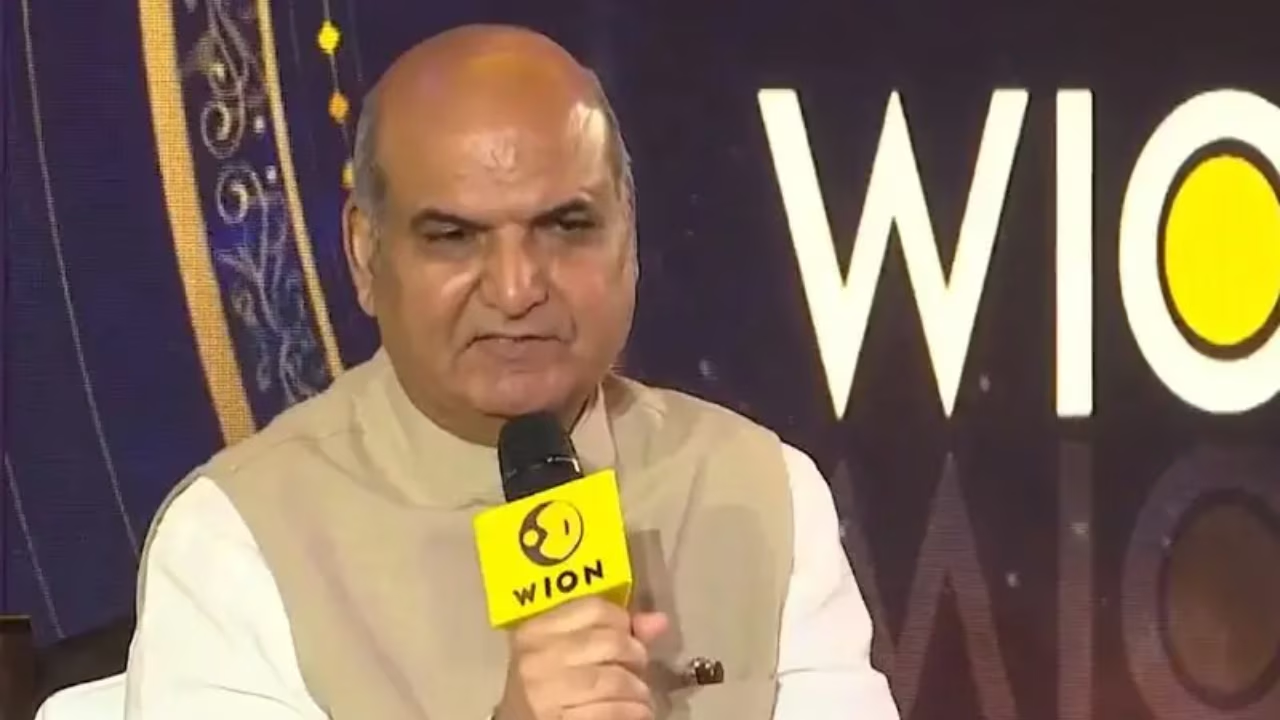
At WION Health Pulse, Dr Rajinder K. Dhamija highlighted the growing importance of brain health in modern economies, explaining how investment in mental wellness can create significant social and economic benefits.
Share Article
https://www.india.com/health/wion-health-pulse-dr-rajinder-k-dhamija-explains-the-brain-economy-and-why-mental-health-is-a-smart-investment-8449163/
WION Heath Pulse 2026 (PC: WION)
WION Health Pulse: Mental health is slowly moving from the background of public discussion to the center of global healthcare priorities. At the WION Health Pulse summit held in New Delhi, experts gathered to understand how emotional well-being is not just a medical issue but also an economic factor that influences national growth. One of the key voices in the discussion was Dr Rajinder K. Dhamija, Director and Professor of Neurology at the Institute of Human Behaviour and Allied Sciences (IHBAS), who explained the concept of the brain economy and why mental health investment can deliver measurable financial returns.
What is the brain economy and why does it matter?
Dr Dhamija introduced the idea of the brain economy, which connects mental well-being directly with economic performance. He explained that a mentally healthy population contributes more effectively to productivity and national income growth.
He said, “There is a concept called Brain economy. If your population is mentally healthy, your GDP will increase exponentially. It is called the Brain economy. If one dollar is invested in one’s mental health has a return of $11 in the productivity. So this is something that is happening globally.” The idea suggests that mental health care should not be seen only as a cost but as an investment that generates long-term benefits for society.
Why is mental health becoming a national concern?
During the discussion, Dr Dhamija highlighted that mental health challenges are rising due to a mix of social, economic and environmental pressures. He noted that modern lifestyles, financial stress and digital overload are making the situation more complex. He also pointed out that the Supreme Court of India has described mental health as an “epidemic”, reflecting the seriousness of the issue. According to him, increasing awareness and early intervention are now essential to reduce long-term damage.
#WIONHealthSummit | “In India, health is not a right, but mental health is,” says Dr Rajinder K. Dhamija (@DrRKDhamija), Professor of Neurology and Director, Institute of Human Behaviour and Allied Sciences (IHBAS) pic.twitter.com/NZ4SmTfa59
— WION (@WIONews) June 17, 2026
What challenges exist in mental health care access?
Dr Dhamija stressed that India still faces major gaps in mental health awareness and treatment-seeking behaviour. He said that even when support is available, many people do not actively seek help due to stigma and lack of understanding. He explained that institutions like IHBAS handle a very high patient load, saying that the centre receives more than 3,000 patients every day. This reflects both the scale of mental health concerns and the shortage of accessible care options. He also added, “People need mental health intervention, but there is less demand for it.”
How can society move forward?
According to Dr Dhamija, the focus must shift toward creating demand for mental health services through education and awareness. He believes that once people understand the importance of brain health, they are more likely to seek help early. He said that structured awareness efforts can bridge the gap between available care and actual utilization, ultimately improving both individual well-being and national productivity.