The primary challenges contend that a UCC infringes on the fundamental right to freely practice religion (Article 25) and rights of minority communities to preserve their distinct cultures (Article 29).
Published: June 29, 2026, 10:48 AM IST
Share Article
https://www.india.com/news/india/uniform-civil-code-ucc-west-bengal-suvendu-adhikari-trinamool-congress-muslim-personal-law-anti-social-activities-bill-polygamy-child-marriage-8460501/
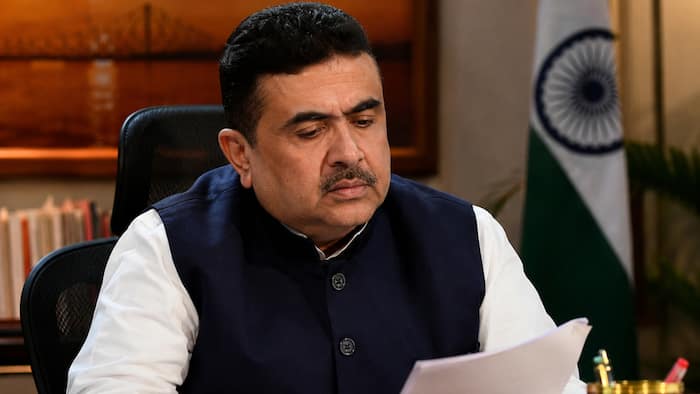
West Bengal Chief Minister Suvendu Adhikari
New Delhi: The Suvendu Adhikari-led West Bengal government is all set to table a Uniform Civil Code (UCC) Bill in the state Assembly. According to the reports, the bill will be modeled similarly to Assam’s UCC legislation. The proposed law will seek to implement uniform civil regulations regarding marriage, divorce, and inheritance across all communities, while explicitly exempting constitutionally protected tribal groups.
It is important to note that the bill will seek to end practices like polygamy and child marriage, and to introduce uniformity in inheritance rights. State BJP leadership has confirmed that protected tribal communities will remain outside the UCC’s ambit. Alongside the UCC, the government has tabled the West Bengal Public Safety and Control of Anti-social Activities Bill, enabling long-term preventive detention and property confiscation to tighten border security and manage demographic shifts.
Read more:
UCC in Bengal: Suvendu Adhikari government likely to table UCC Bill today at West Bengal assembly
What Is UCC?
A Uniform Civil Code (UCC) seeks to replace religion-based personal laws with a common set of rules governing civil matters such as marriage, divorce, inheritance, succession, adoption, and maintenance. Notably, the idea of the UCC comes from Article 44 of the constitution. A directive principle of state policy states that the State should endeavour to secure a uniform civil code for citizens across India. Since Directive Principles are not enforceable by courts, governments are not legally bound to implement them.
Notably, the Bharatiya Janata Party has always advocated the Uniform Civil Code as part of its broader governance agenda. Uttarakhand became the first state to implement the UCC, followed by Gujarat and Assam. Madhya Pradesh is in the drafting and planning stage and has not yet implemented the law.
Debate around the UCC:
Opposition leaders across states have alleged that the UCC is the BJP’s attempt to “divide society”, arguing that it limits religious freedom. “The West Bengal government is following the path taken by its colleagues in other states. West Bengal is a state where people of diverse religions, castes and communities have coexisted for centuries. I suggest that the Government of India should deliberate on the concept of the UCC in consultation with all states and civil society forums across the country, ensuring that such legislation does not further divide our society,” Congress leader Adhir Ranjan Chowdhury told ANI.
Here are some of the key details:
- West Bengal has one of India’s largest minority populations, particularly Muslims, who account for roughly 27 percent of the state’s population according to the latest census.
- The UCC would replace religion-specific personal laws governing issues such as marriage, divorce, inheritance and adoption
- The Bharatiya Janata Party has long supported the implementation of a Uniform Civil Code
- The saffron camp has argued that it would promote equality before the law and gender justice.
- Raising the issue in West Bengal allows the party to reinforce one of its core ideological commitments while differentiating itself from regional rivals.
- The All India Trinamool Congress has generally opposed the implementation of a nationwide UCC
- The party has said that personal laws and cultural diversity must be respected.
- As a result, the UCC has become a major point of political contestation between the BJP and the TMC in the state.
What are the challenges and legal hurdles?
A Uniform Civil Code (UCC) is likely to face significant legal hurdles in courts. The primary challenges contend that a UCC infringes on the fundamental right to freely practice religion (Article 25) and rights of minority communities to preserve their distinct cultures (Article 29).
Infringement on Religious Freedom (Article 25):
Those who oppose UCC often argue that personal laws (marriage, divorce, inheritance) are intrinsically tied to religious identity. A state-imposed UCC could be challenged as a violation of Article 25, which guarantees the right to profess, practice, and propagate religion.
Violations of Cultural and Minority Rights (Article 29)
It is important to note that Article 29 protects the right of any section of citizens to conserve its distinct language, script, or culture. It has been seen that the tribal and minority communities often argue that a uniform law flattens cultural nuances and imposes a majoritarian framework on diverse customs. Courts may need to evaluate whether a “one-size-fits-all” code disproportionately marginalizes these groups.
Legislative Competence and Federalism
Matters regarding personal laws fall under the Concurrent List of the Indian Constitution, meaning both state legislatures and the Parliament can enact laws. If state-specific UCCs (like those enacted in Uttarakhand) conflict with central laws or with each other, it can lead to complex jurisdictional battles over whether a state overstepped its constitutional boundaries.