The controversy surrounding E20 petrol shows no signs of abating. For some time now, people have been demanding that both ethanol-free and ethanol-mixed petrol be made available to them. The government has clarified its stance on this issue.
Updated: July 11, 2026, 12:42 PM IST
Share Article
https://www.india.com/news/india/ethanol-controversy-modi-government-makes-big-statement-on-ongoing-ethanol-controversy-says-selling-three-types-of-petrol-simultaneously-not-possible-due-to-distribution-major-challenge-updates-8471087/
Modi government makes BIG statement on ongoing ethanol controversy, says selling three types of petrol simultaneously not possible due to…
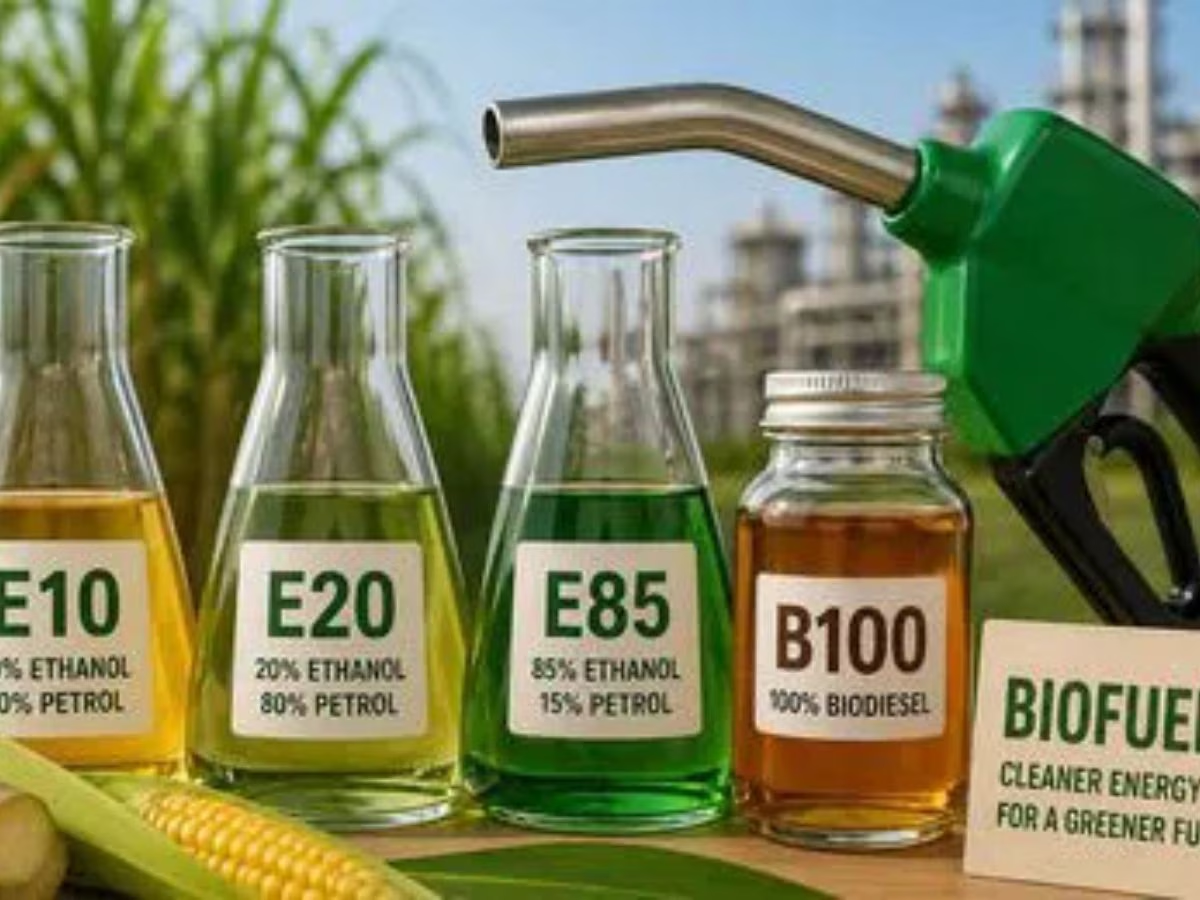
Ethanol controversy: The government has implemented Ethanol 20 (E20) petrol across the country. This petrol is available at all petrol pumps in the country and is claiming that it is safe and better. At the same time, people are of the view that it is causing problems with their vehicles and hence they are demanding to make available pure petrol and petrol mixed with ethanol.
However, the central government has completely rejected the demand to sell pure petrol (E0), E10, and E20 petrol simultaneously across the country. The government says that selling multiple types of petrol simultaneously at petrol pumps will not only increase the cost of oil but will also make its distribution a major challenge. The Ministry of Petroleum and Natural Gas issued a note on July 10th making it clear that E20 petrol (petrol mixed with 20% ethanol) will remain the country’s standard petrol.
Read more:
Consumers on Alert: Rising global oil markets set to push Pakistan petrol, diesel prices higher
What is the problem in selling different types of petrol?
- Large network: According to the ministry, India has a huge fuel supply network, which includes more than 1 lakh petrol pumps, oil refineries, depots, pipelines and storage tanks.
- Huge costs: If each pump sells three different types of petrol (E0, E10, and E20), each would require separate storage tanks, pipelines, and vehicles. This would make oil management and maintenance expensive.
- Comparisons with premium petrol are unfair: The government also rejected the argument that people were citing premium petrol as an example. The government stated that premium petrol is sold in very small quantities and does not require the creation of a separate supply network across the country.
The government said that huge investments have been made in factories, warehouses and logistics to promote the ethanol blending programme in the country.
If the government backs down and re-introduces E10 as standard petrol, ethanol factories will be idled, hurting the farmers, companies, cooperatives, and banks that have invested in them.
According to data, India is expected to achieve its target of 20 percent average ethanol blending in petrol between November 2025 and June 2026, up from 19.2 percent last year. You can see the note issued by the Ministry of Petroleum and Natural Gas above.
What did you say about old vehicles?
People whose vehicles were designed for E10 petrol are expressing concerns about E20 causing damage to their vehicles. However, the government has assured that the old vehicles won’t have to face the damage.
- Decision after thorough investigation: Before introducing E20 petrol, car and bike manufacturers, parts suppliers, testing agencies, and experts were consulted. Engine strength, pipelines, pollution, and mileage were all thoroughly examined.
- Corporate data: The government presented data from Maruti Suzuki and Hero MotoCorp. Maruti serviced 28.4 million vehicles in the 2025-26 fiscal year. Of these, 15 million were old vehicles, meaning they were not E20 compliant. Despite this, no complaints were received regarding corrosion or component damage due to E20 oil. Hero MotoCorp’s experience was similar.
‘Mileage will be less, but benefits are more’
- Reduced mileage: The government has acknowledged that using E20 petrol could reduce vehicle mileage by 3 to 5 percent. However, the government says this is only one aspect.
- Other benefits: The government says that in exchange for this loss, customers are getting fuel with a higher octane rating (which improves engine performance). Furthermore, the country has to import less crude oil and reduce pollution.