The move follows the Union Cabinet’s approval on Friday of a Bill and related provisions designed to establish fast-track courts and provide harsher punishment in cases involving paper leaks and examination fraud, according to news agency IANS citing official sources. The proposed legislation is expected to be taken up in Parliament next week.
Meanwhile, the Supreme Court is scheduled to hear on Monday two separate pleas alleging police excesses against students protesting over NEET paper leak and other exam irregularities. According to the apex court’s cause list of July 27, the pleas would come up for hearing before a bench comprising Chief Justice Surya Kant and Justices Joymalya Bagchi and V Mohana. A bench headed by the CJI had on July 24 agreed to hear these petitions after the matter was mentioned before it.
“Police is using excessive force against the students,” senior advocate Gopal Sankaranarayanan had told the bench while mentioning the pleas for urgent listing, news agency PTI reported. Sankaranarayanan had told the bench that two separate petitions were filed regarding the violence that took place during students’ protests across the country. The CJI had said that the pleas would be listed for hearing on July 27.
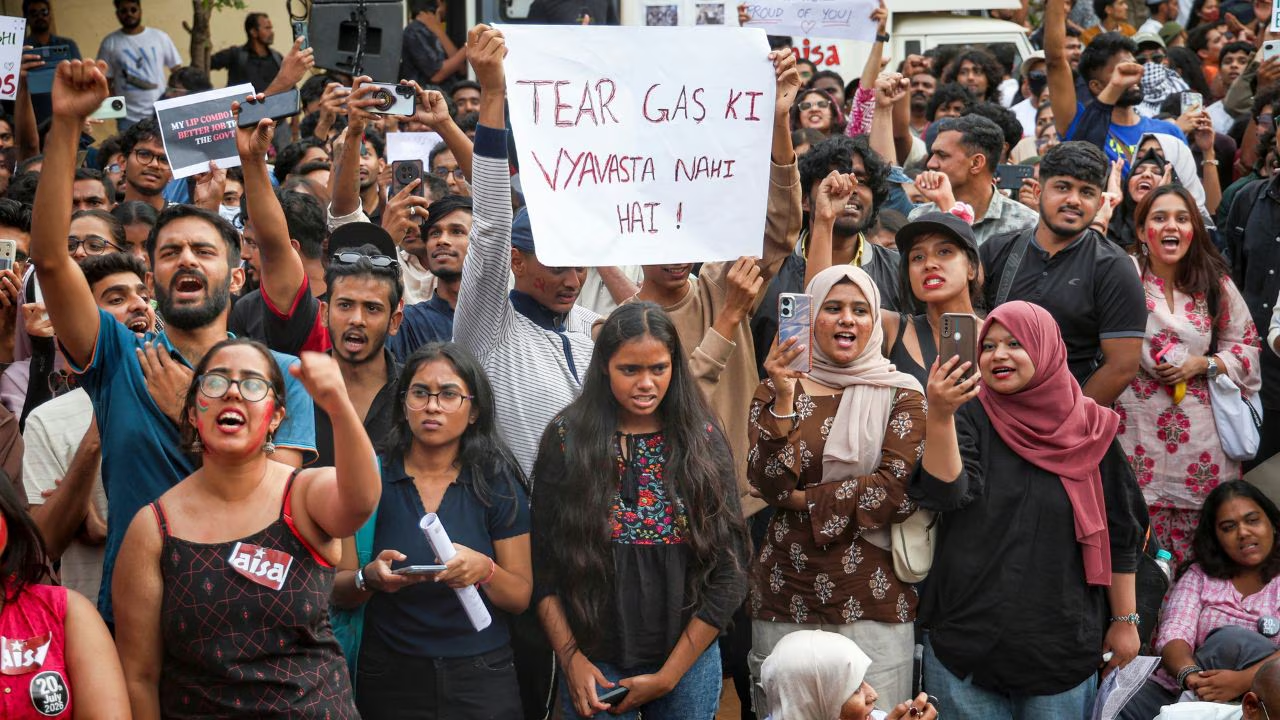
It is to be noted that students were staging protests in several states against the paper leak. The Cockroach Janta Party-led march on July 20 in Delhi witnessed clashes between protesters and security personnel, who used lathis and tear gas shells to disperse crowds attempting to move towards Parliament. The protesters were demanding the resignation of Union Education Minister Dharmendra Pradhan over the NEET paper leak issue.
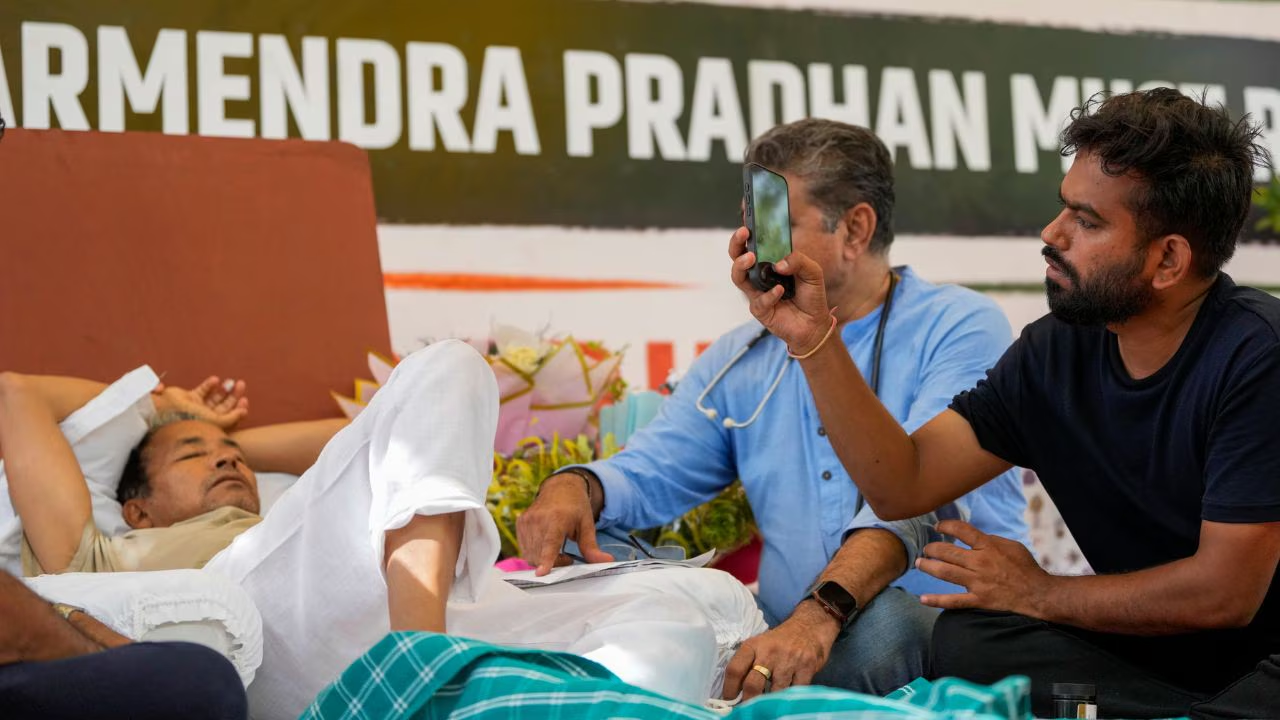
On Saturday, the CJP called off its 36-day agitation after Pradhan resigned and the government accepted its other demands. Pradhan announced his resignation in a statement, saying the developments of the past 10 days had “saddened” him deeply and that the issue was “not a matter of personal prestige”.
PM Modi announces Nandan Nilekani-led task force for exam reforms
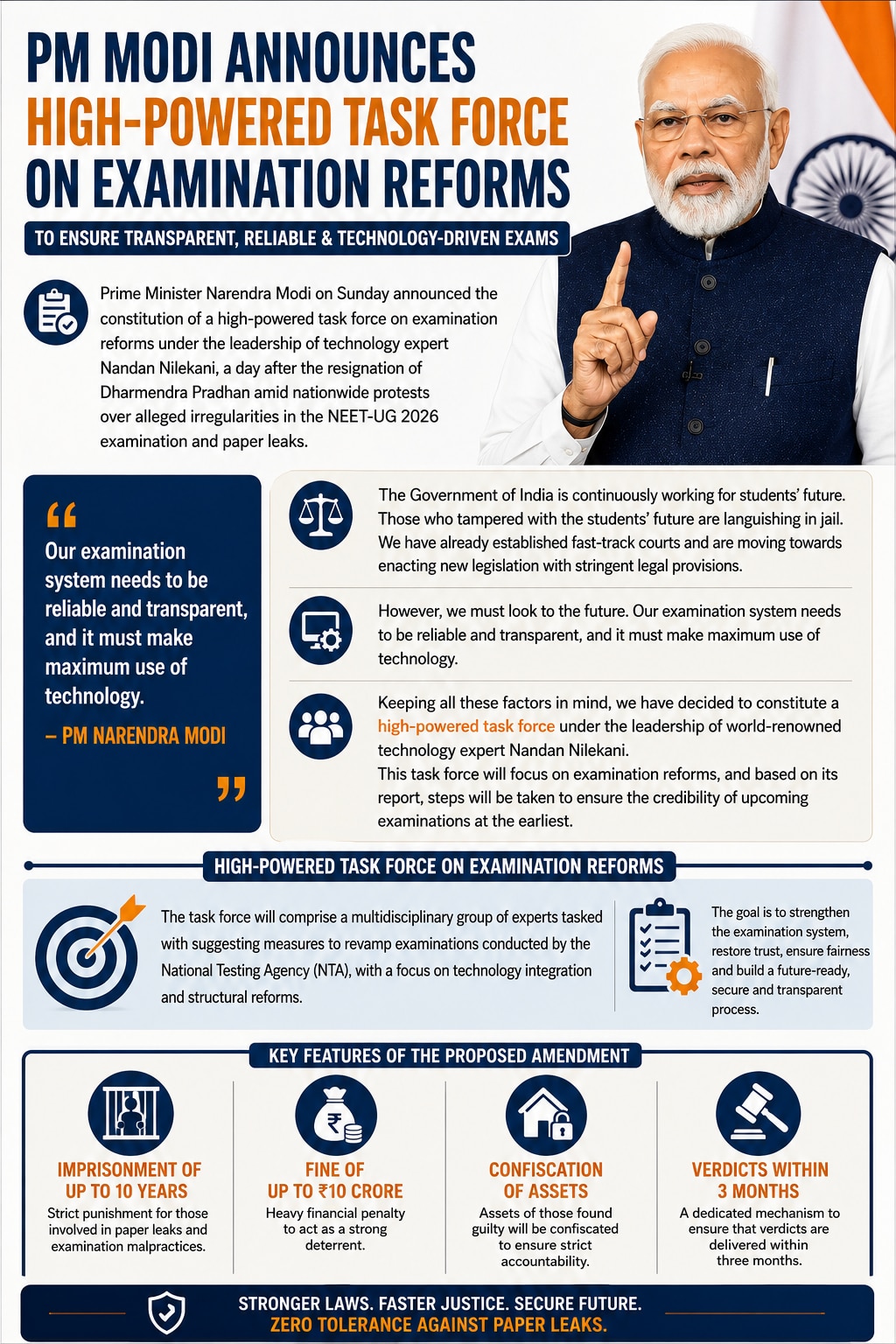
Earlier on Sunday, Prime Minister Narendra Modi announced the constitution of a high-powered task force on examination reforms under the leadership of technology expert Nandan Nilekani. The move came just a day after the resignation of Dharmendra Pradhan amid nationwide protests over alleged irregularities in the NEET-UG 2026 examination and paper leaks.
HIGH POWERED TASK FORCE on examination reforms under the leadership of Shri Nandan Nilekani constituted.@NandanNilekani pic.twitter.com/mMpmPdIEL5
— Narendra Modi (@narendramodi) July 26, 2026
PM Modi stated the task force would submit a report and stressed the need for a “reliable” and “transparent” examination system with greater use of technology. Sharing a video message on X, the Prime Minister stated, “The Government of India is continuously taking various measures for the future of students. Those who tampered with the students’ future are languishing in jail. We have already established fast-track courts. We are also moving towards enacting new legislation in Parliament that incorporates stringent legal provisions. However, we must look to the future. Our examination system needs to be reliable and transparent, and it must make maximum use of technology.”
Key members of the high-powered task force
The task force will comprise a multidisciplinary group of experts tasked with suggesting measures to revamp examinations conducted by the National Testing Agency (NTA), with a focus on technology integration and structural reforms. The other members of the high-powered task force include former ISRO Chairman S Somnath, former Intelligence Bureau Director Tapan Deka, IIT Madras Director V Kamakoti, former Education Secretary Anita Karwal and logistics expert Amrit Lal Meena.
Rahul Gandhi, leader of the Opposition in the Lok Sabha, wrote to Union Home Minister Amit Shah, demanding accountability for the alleged assault on students who were peacefully protesting in Delhi on July 20. In his letter, Gandhi said that the students were protesting for a fair and accountable education system but were met with excessive force by security personnel. “I write to demand accountability for the barbaric assault on students who were peacefully protesting in Delhi on July 20, 2026. Our students were demanding a fair and accountable education system. Instead of being heard, security forces assaulted them with indiscriminate force, including lethal weapons and tear gas. Hundreds have suffered serious injuries. Women students have been assaulted by policemen, including by deliberately targeting their private parts.”