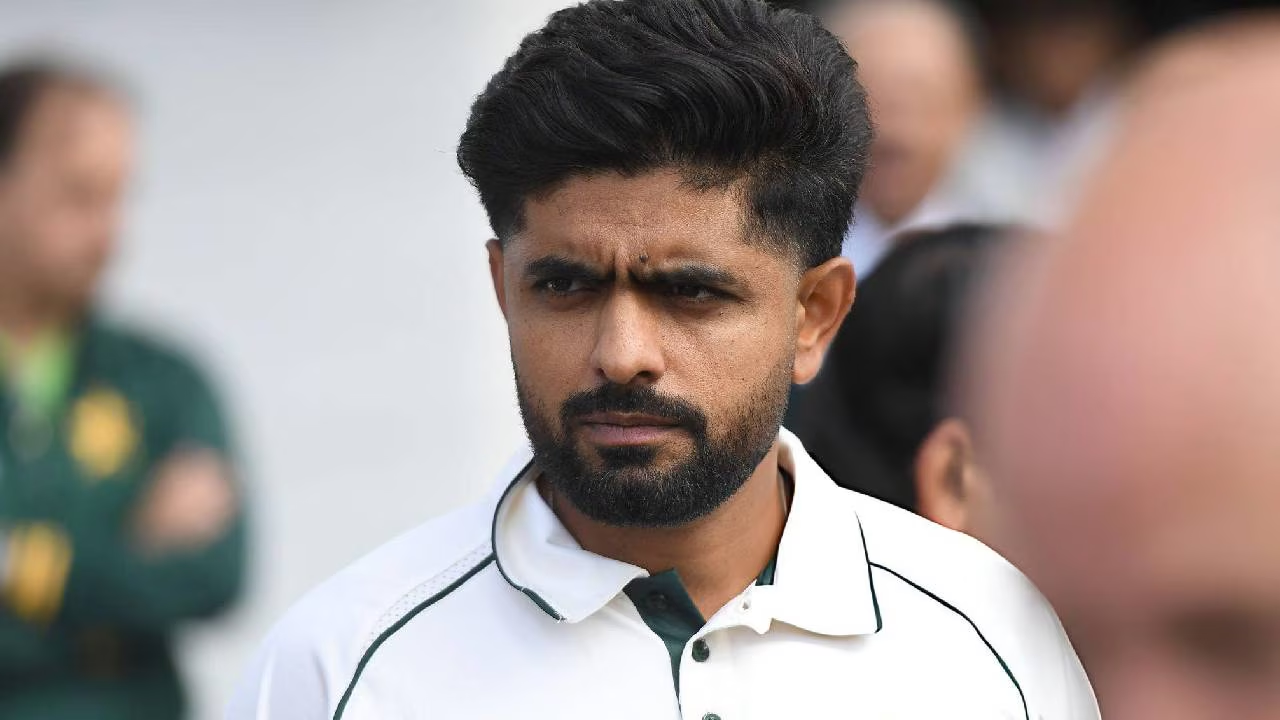
Pakistan’s captain Babar Azam failed to showcase his magic for his side against England in the second Test and was dismissed for a low scoreScroll down to read the full story.
Share Article
https://www.india.com/sports/watch-babar-azam-falls-cheaply-as-pakistan-sink-to-new-low-in-lords-test-8512110/
Babar Azam fails as England dominate Pakistan in the second Test
England and Pakistan are playing the second Test of the seriesBoth teams are looking for victory in this gameHowever, things are getting complicated for the visitors as Babar Azam’s side are facing complications against the hosts.
Babar Azam fails to deliver as Pakistan face early setbacks vs England
Pakistan’s key player, Babar Azam, handled the team’s responsibility as a captainBut, he didn’t make a big impact, as his men failed to perform well against England’s playersIn this tough situation, the captain needs to boost the team’s confidence by showing an impressive performance.
Meanwhile, in Pakistan’s scenario, the odds are against them, as captain, Babar Azam, failed to shine for his side in the second Test and gifted his wicket to the England teamBabar Azam was trying to play a shot towards coverBut, the ball was caught by Jordan Cox in the slips, which helped Josh Tongue to get a wicket and send Babar to the dressing room for a score of 8 runs off 10 balls.
Babar Azam dismissed for 8(10), Pakistan lost their 3rd Wicket for 30.#PAKvsENG https://t.co/j61Z8YDhl0
— CricketGully (@thecricketgully) August 28, 2026
England pacers dominate Pakistan as Robinson’s four-for puts hosts in command
Well, let’s discuss some of the key moments that happened on Day 2 of this important gameEngland had resumed their first innings as they were on a score of 248 runs for the loss of nine wicketsThe hosts managed to score 290 runs.
However, Pakistan get a chance to bat in their inningsBut, they couldn’t make a bigger impact in this match as England pacers started showing their magic on their own soil and dismissing the visiting batting lineupAzan Awais was the batter, who tried to stick on the wicket and score some runs for his sideAwais scored 46 runs off 102 balls, including seven fours.
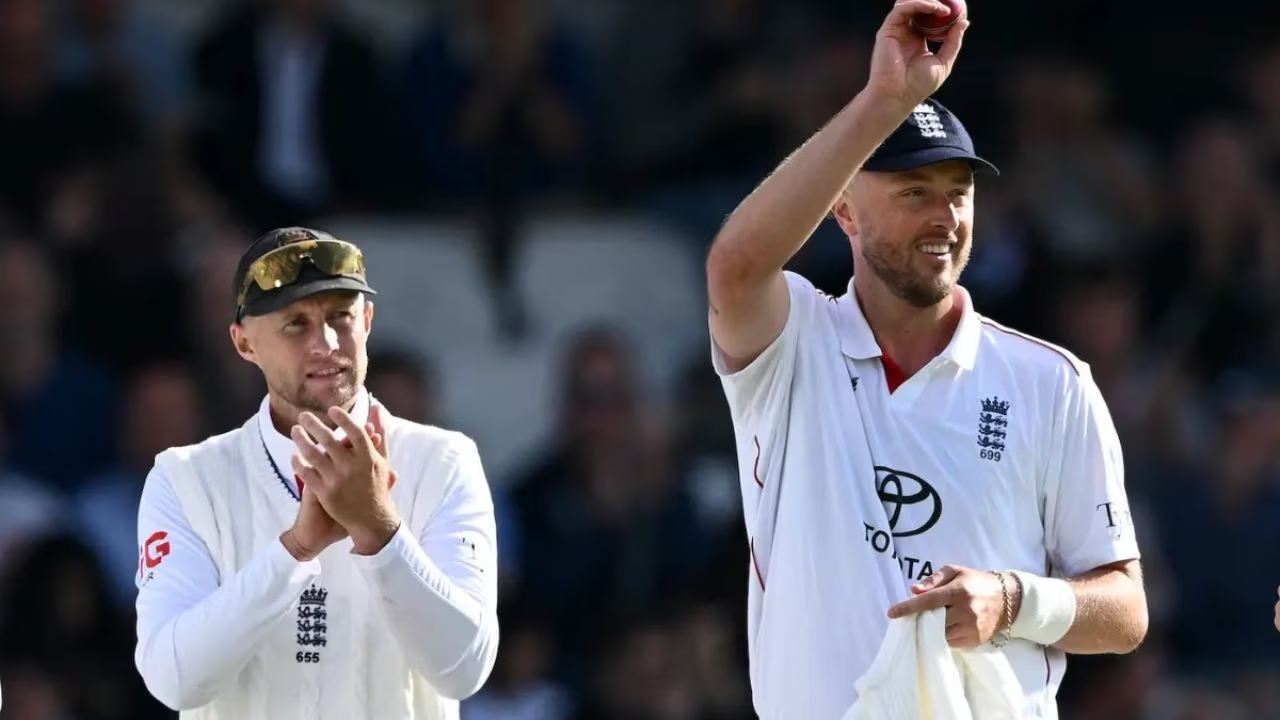
England’s pacers didn’t give a chance to Pakistan’s batters to dominate as players like Ollie Robinson, Jofra Archer and Josh Tongue showcased their wicket-taking abilityRobinson took four wickets in Pakistan’s inningsMeanwhile, Archer gets three and Tongue gets two.
Their impressive bowling performance maintained their lead and got their second innings on the same dayPakistan’s Khurram Shahzad helped his side by dismissing Ben Duckett and Jordan Cox early in the matchOn the other hand, captain Joe Root also flopped in the second innings by getting dismissed for 24 runs off 37 balls by Mohammad AliAfter his dismissal, Emilio Gay and Harry Brook stood in the crease and increased their leadAfter Day 2 Stumps, England were leading by 261 runs.