An Iranian singer has become the centre of international discussion after a viral performance led to severe legal consequences.
Share Article
https://www.india.com/entertainment/who-is-parastoo-ahmadi-iranian-singer-sentenced-to-74-lashes-after-viral-performance-without-hijab-8452448/
Iran cracks down on singer Parastoo Ahmadi (PC: Twitter)
A recorded performance by Iranian singer Parastoo Ahmadi has drawn worldwide attention after it led to serious legal consequences in Iran. The case has sparked debate over artistic freedom, cultural rules and how online platforms can turn private creative work into global controversies within hours. Ahmadi’s performance, which was shared online, became widely discussed after it showed her singing without a hijab, something that goes against Iran’s strict public dress regulations.
Who is Parastoo Ahmadi?
Parastoo Ahmadi is an Iranian artist, singer, composer and filmmaker who has gained recognition for her independent work and online presence. Born on March 21, 1997 in Nowshahr, Iran, she studied film directing at Soureh International University. She also trained in music from a young age, beginning solfège and vocal training in folk and classical styles when she was just 14.
Read more:
Know Mahsa Amini, who was allegedly beaten to death for breaking Iran’s Hijab law, she was…
She sings in both Persian and Mazandarani and has built a following through her music shared on social media platforms, especially Instagram, where she posts songs and clips that often reflect personal expression and emotional themes.
The viral caravanserai concert
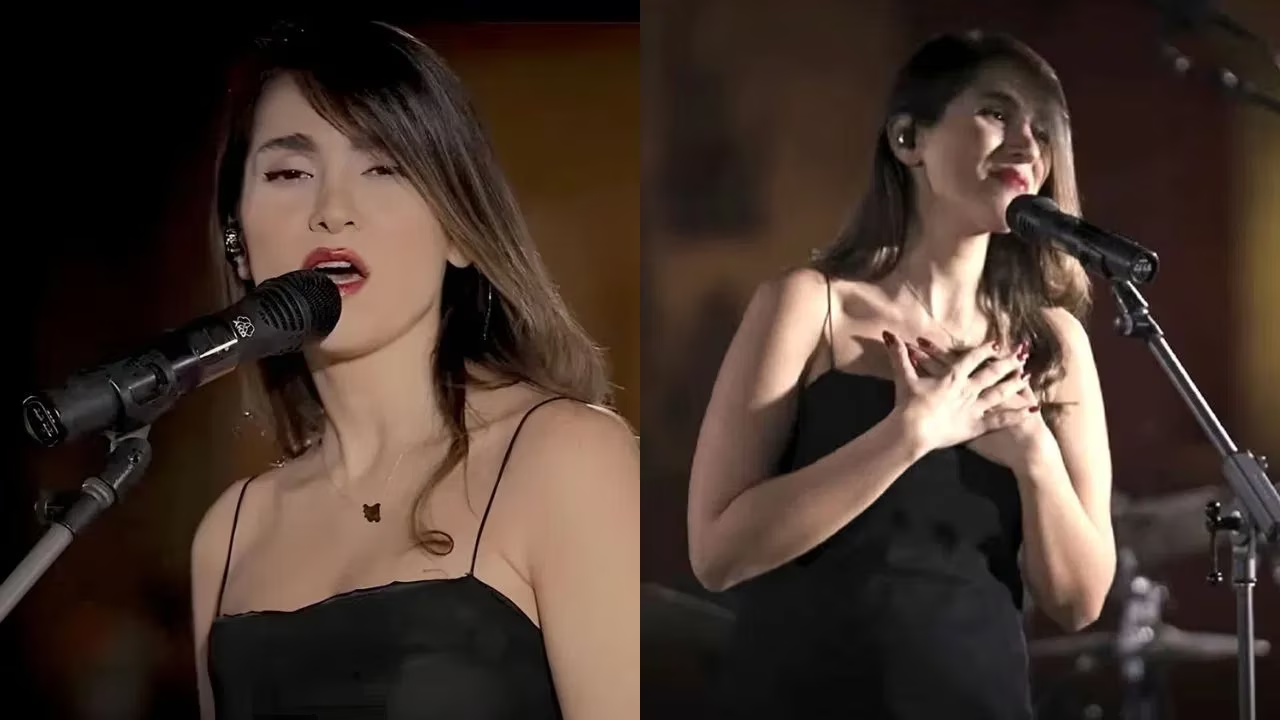
Back in 2024, Parastoo Ahmadi performed a special online concert that was later streamed on her YouTube channel. The performance was recorded in Iran inside the grounds of a traditional caravanserai complex at Dayr-e Gachin Caravanserai.
The setup included Ahmadi and her four-member band featuring keyboard, percussion and guitars. The concert had no live audience present and was filmed in an open outdoor stage environment. In the video, Ahmadi appeared without a headscarf and wore a long flowing black dress with bare shoulders. The performance, described by many as symbolic and emotional, quickly gained attention online and spread across social platforms.
Statement and artistic expression
Before or around the time of the performance, Ahmadi shared a personal message explaining her intention behind the concert. She said, “I, Parastoo, the girl who wants to sing for the people I love. This is a right I couldn’t overlook—singing for the land I deeply adore. Here, at this point in our beloved Iran, where history and legends intertwine, hear my voice in this imaginary concert and imagine this beautiful homeland…”
One day after the U.S. signed a deal with the Islamic Republic، the regime in Iran, handed Parastoo Ahmadi 74 lashes for singing on YouTube.
They call America the Great Satan. And then they flew to the table and signed a deal with the «Devil«. But a woman’s voice scared them… pic.twitter.com/FMJdKD7EGZ
— Masih Alinejad ️ (@AlinejadMasih) June 18, 2026
Legal consequences and reported punishment
After the performance went viral, reports stated that Parastoo Ahmadi and eight members of her production team, including musicians, were sentenced to 74 lashes. The punishment was linked to the act of performing without a hijab and the nature of the broadcasted concert. The case has once again brought attention to Iran’s strict laws that require women to cover their hair in public and restrict female solo singing performances.
Cultural and political background
The controversy is also connected to broader social tensions in Iran. Following the 1979 Islamic revolution, strict rules were introduced regarding women’s dress and public performances. These laws continue to shape artistic expression in the country. Ahmadi’s work has also been associated with support for the 2022–2023 protests that followed the death of Mahsa Amini, who died in custody after being arrested for allegedly violating hijab rules. Those protests saw widespread calls for change and greater freedom for women.