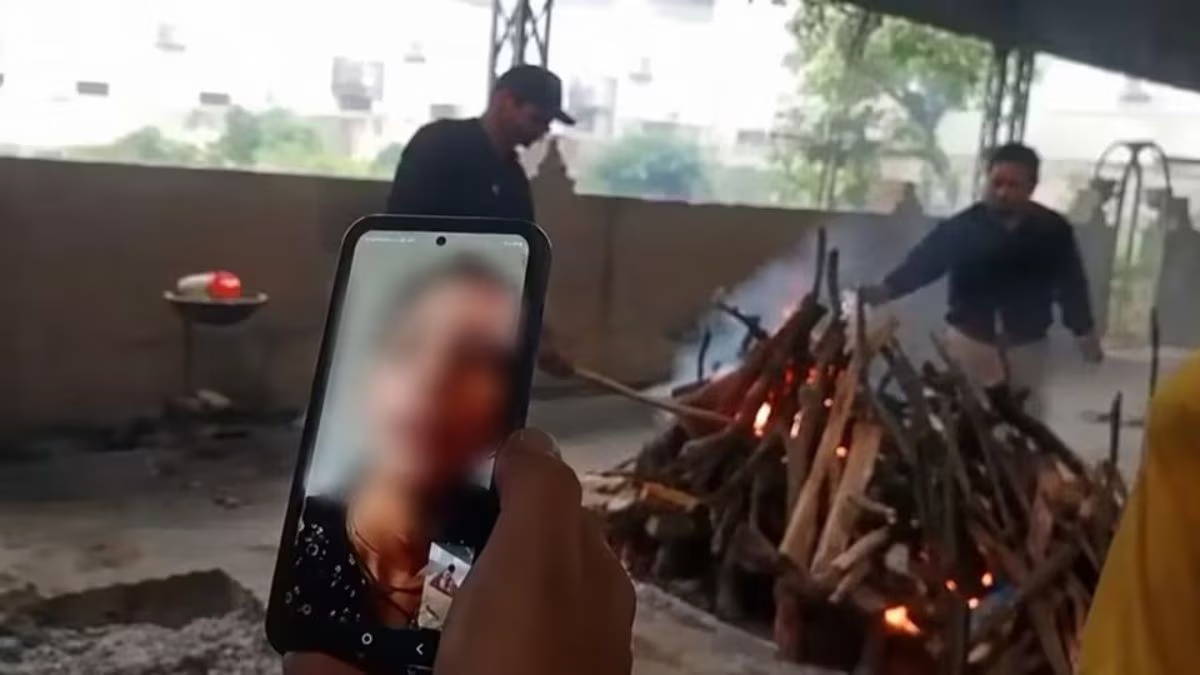
A heartbreaking moment unfolded in Haryana’s Sonipat when an elderly man living in an old-age home was cremated in the absence of his three daughters, who watched the last rites virtually from Nepal, Uttar Pradesh and Mumbai.
Published: August 6, 2026, 11:40 PM IST
Share Article
https://www.india.com/news/india/daughters-attend-fathers-last-rites-via-video-call-in-haryana-why-are-incidents-of-parent-abandonment-rising-in-india-8495108/
After a man passed away in Haryana, his last were performed by an old-age home while his three daughters attended the funeral via video callImage Credit: X
In an incident that may make many uncomfortable, an elderly resident of an old-age home in Haryana’s Sonipat was laid to rest by the workers of the old-age home, with his three daughters joining the cremation only via video call from Nepal, Uttar Pradesh and MumbaiA video of the funeral has since gone viral, showing one of the daughters asking whether everything had gone smoothly and requesting that the recording be sent to her after the ceremony.
The incident has brought to light the rising cases of parental abandonment by children in IndiaThere are several reasons why parental abandonment has risen in a country that once took pride in living together.
Let us take a look at the details.
Why have cases of children abandoning their parents increased?
There are several reasons why the cases of children letting their parents live alone have risen over the yearsThese include medical costs, economic pressures, migration and separation and the collapse of the joint family systemMedical advances now keep elders alive longer, requiring families to absorb care for decades rather than years, while migration is another issue as roughly 32 million Indians live abroad, and many more live in distant metros, leaving parents to “age alone” in villages or towns where home care eventually becomes unsafe.
Caregiving has long been sustained by the unpaid efforts of women and additional peopleHowever, with more women entering the workforce and the collapse of the joint family system, that model has become less viableThe lack of adequate public support, including respite care, has left a growing gap.
Abandonment is frequently a calculated move where children seize family property or savings and then leave parents at temples or railway stationsMeanwhile, urbanisation has isolated elders in flats where they become targets for crime, leading some families to view old age homes as a safer environmentNotably, India has an estimated 8.8 million people living with dementia, a condition so exhausting that even dutiful families often reach a breaking point within 18 months due to a lack of support.
What does Indian law say about parental care?
The Indian legal system addresses caregiving within families in two ways – by requiring children to provide support to ageing parents and by recognising parents’ duty to care for their children.
Under Indian law, all individuals are legally required to maintain and support their biological, adoptive, or step-parentsNotably, senior citizens (60+) can apply to a Maintenance Tribunal for support from adult children or legal heirs if they cannot care for themselves.
According to the law, abandoning or neglecting a senior citizen is a punishable offenseMaintenance is also enforceable under religious personal laws (e.g., Hindu law) and the Bharatiya Nagrik Suraksha Samhita, 2023Care can be structured as physical custody (daily care), joint custody (shared responsibility), or third-party custody (e.g., grandparents) if parents are unfit.
What are community support alternatives?
In an effort to address the issue and provide senior care to senior citizens, India has taken lots of steps through a combination of volunteer networks, peer support, and digital connectivity.
Firstly, volunteer-led models are being created like Kerala’s Neighborhood Network in Palliative Care that trains local volunteers (students, shopkeepers) to provide companionship and medical comfort to the elderly.
Also Read | Unrest in Bangladesh continues, Hindu man dies after he jumps into canal after…, third death in four days
Peer support groups like Elders Self-Help Groups and Senior Citizen Associations are also being created to facilitate social integration and mutual aid within communitiesMeanwhile, the government has launched several helplines, including Elderline (14567), that offer free emotional support and guidance to seniors across the country.
Dignified re-employment for elders is also being consideredThe SACRED portal matches seniors with job opportunities, helping reduce loneliness through active societal participation and financial independencePrograms like the NAITIK PATAM game foster bonding between children and elders to strengthen family support systems.
Initiatives like HelpAge India’s digital literacy workshops teach seniors to use smartphones and social media to reconnect with family and friendsThe NPHCE and AVYAY frameworks provide a basis for delivering comprehensive healthcare and social protection at the community level.