In September 2014, Prime Minister Narendra Modi first proposed the idea of an International Day of Yoga during his address to the United Nations General Assembly.
Updated: June 21, 2026, 4:38 PM IST
Share Article
https://www.india.com/news/india/pm-modi-proposed-idea-of-international-day-of-yoga-at-unga-how-did-it-become-one-of-indias-most-successful-soft-power-exports-explained-united-nations-guinness-world-records-unesco-8452946/
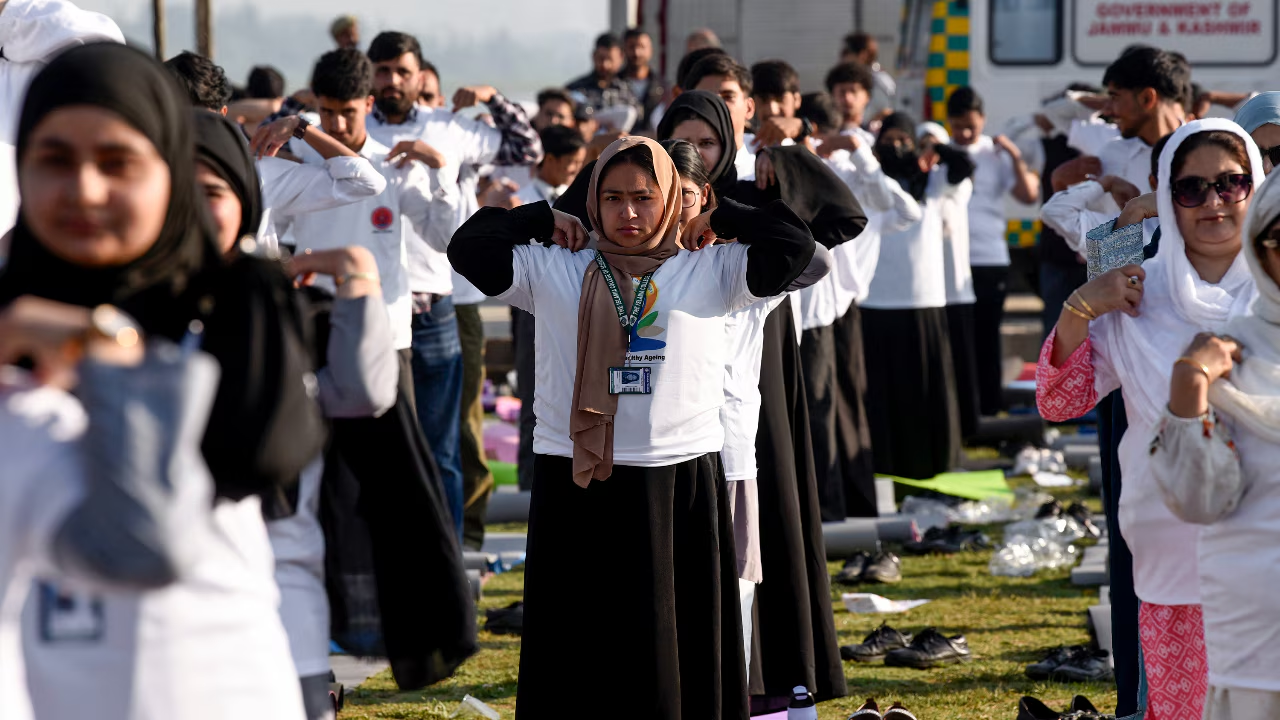
People perform Yoga on the occasion of 12th International Day of Yoga, at the bank of Dal Lake, in Srinagar on Sunday. (ANI Photo)
New Delhi: International Yoga Day, observed worldwide every year on June 21, highlights the ancient Indian practice that unites the mind and body, as well as the importance of promoting physical, mental, and spiritual well-being.
How India Took Yoga to United Nations
India demonstrated a unique blend of diplomatic and cultural efforts to secure global recognition for ancient Yoga. In September 2014, Prime Minister Narendra Modi first proposed the idea of an International Day of Yoga during his address to the United Nations General Assembly (UNGA). He described Yoga as an invaluable gift from India’s ancient tradition, symbolising the unity of mind and body.
The Key Stages Of How India Advanced This Proposal At The United Nations:
Proposal at the General Assembly, September 2014: During the 69th session of the UN, the Prime Minister presented Yoga as a holistic approach to health and well-being.
Widespread Support, December 2014: Nations across the globe welcomed India’s proposal. A record 177 countries supported the resolution, marking the highest number of co-sponsors for any resolution in the history of the UNGA.
Historic Declaration, 11 December 2014: Following the resolution’s passage, the UN unanimously declared June 21 as the International Day of Yoga.
First International Day of Yoga, 21 June 2015: On this day, millions of people across hundreds of cities worldwide—from the UN headquarters to New York’s Times Square—practised Yoga together. Since then, the International Day of Yoga has been celebrated annually across the globe, conveying a message of health and harmony.
What did PM Modi say in his address at UNGA in September 2014?
In his maiden address to the United Nations General Assembly (UNGA) in September 2014, Prime Minister Narendra Modi proposed the historic idea of observing June 21 as the International Day of Yoga. This proposal garnered record support, and, on December 11, 2014, the United Nations declared June 21 as the International Day of Yoga through Resolution 69/131. The primary objective of this initiative is to raise awareness across the globe about the physical, mental, and spiritual benefits of yoga. Since then, millions of people worldwide have been celebrating this day as a global festival of health and well-being.
177 Countries Co-Sponsored The Resolution
The proposal introduced by India at the United Nations received unprecedented support from 177 member nations. This marked the highest number of co-sponsors for any resolution in the history of the United Nations General Assembly. This historic decision was taken in December 2014, sparking a global mass movement to celebrate the ancient tradition of Yoga and its health benefits worldwide.
First International Yoga Day Observed on June 21, 2015
The first International Yoga Day was celebrated on June 21, 2015.
Here are some key points regarding the inception and significance of this historic day:
Proposal and Support: The initiative was introduced by Prime Minister Narendra Modi during his speech at the United Nations General Assembly in September 2014.
UN Approval: On December 11, 2014, the United Nations approved the proposal to declare an International Yoga Day. This proposal received support from a record 177 member nations.
Selection of Date: June 21 was chosen because it is the longest day of the year in the Northern Hemisphere and holds great significance in yogic traditions.
First Official Celebration: The inaugural main event was held at Rajpath (now Kartavya Path) in New Delhi. During this event, 35,985 people performed yoga together, setting two Guinness World Records: one for the largest yoga class and another for the participation of the highest number of nationalities (84).
How Did Yoga Become India’s Most Successful Soft-Power Export?
Yoga became India’s most successful soft-power export through a blend of early grassroots cultural exchange and strategic, state-led global diplomacy. It evolved from an ancient spiritual practice into a universal language of health.
Key Drivers of Global Success
Pioneering Spiritual Diplomacy: The groundwork was laid in 1893 by Swami Vivekananda, who introduced Indic philosophies to the West. By the 1960s, prominent Indian gurus and the “hippie trail” popularised yoga as a counter-culture and wellness tool.
United Nations Recognition: The Indian government aggressively scaled yoga’s diplomatic profile when Prime Minister Narendra Modi successfully spearheaded a unanimous UN resolution to declare June 21 as International Yoga Day. It is now celebrated in roughly 180 countries.
Institutionalization & Integration: Beyond physical fitness, India’s embassies globally champion yoga to foster cross-cultural understanding. Domestically, the practice has been woven into public policy, workplace programmes, and preventive healthcare initiatives.
UNESCO Heritage Status: UNESCO officially inscribed yoga on its Representative List of the Intangible Cultural Heritage of Humanity, validating its historical significance.
Booming Wellness Economy: Yoga’s proliferation has created a massive global industry spanning workshops, teacher training, and wellness tourism, drawing thousands of international visitors to Indian hubs like Rishikesh and Mysuru.