Hong Kong
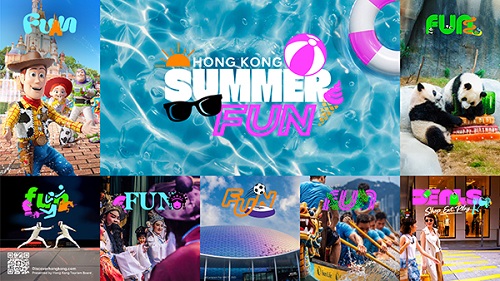
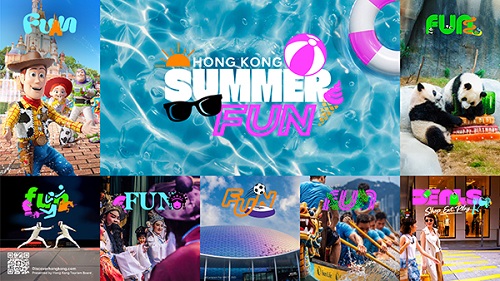
To welcome the peak summer travel season, the Hong Kong Tourism Board (HKTB) will launch a brand-new promotion, “Hong Kong Summer Fun”, from June 19, 2026 connecting a series of citywide highlight events and enticing offers to energise the summer season. The HKTB will work with the business community to roll out a wide range of offers covering attractions, dining, transportation and shopping, enhancing Hong Kong’s appeal as a summer destination, attracting more overnight visitors and boosting overall spending.
 |
From dragon boats to dining deals, Hong Kong invites the world to its most vibrant summer ever
Kicking off the summer season will be the 50th-anniversary edition of the “Sun Life Hong Kong International Dragon Boat Races,” organised by the HKTB, co-organised by the Hong Kong China Dragon Boat Association (HKCDBA), and proudly title-sponsored by Sun Life. The event will be fully upgraded into the “Sun Life Hong Kong International Dragon Boat Festival” and will debut at the Tsim Sha Tsui Promenade this month.
HKTB Chairman Dr Peter Lam said, “The summer holidays are a golden period for travel, and with a wave of mega events this summer, the HKTB is proud to present the new summer promotion ‘Hong Kong Summer Fun’, leveraging different events to strengthen promotion and partnering with the business community to roll out hundreds of thousands of offers covering attraction, dining, transport and shopping. We aim to attract more overnight visitors to Hong Kong and boost consumption across more sectors. As the headline international flagship event of ‘Hong Kong Summer Fun’, the ‘Sun Life Hong Kong International Dragon Boat Festival’ not only runs over a longer period, but also features a stronger race line-up and more vibrant entertainment programme than in previous years, offering an experience found only in Hong Kong for locals and visitors, while showcasing Hong Kong’s position as the Events Capital of Asia.”
Kicking Off the Summer Season: Sun Life Hong Kong International Dragon Boat Festival Debuts in an Upgraded Format
Over 220 Dragon Boat Teams from Around the World Compete in Victoria Harbour
This year’s races will be held on 27 to 28 June, with the number of participating teams, countries and regions higher than last year. Teams from 16 countries and regions will take part, including the Chinese Mainland, Canada, the United States, the United Kingdom, Australia, Malaysia, the Philippines, Singapore, South Korea, Thailand, Qatar and Indonesia. Over 220 teams and more than 4,500 athletes will compete in 21 races.
Special “50th Anniversary Fishermen Invitational Cup” Preserves the Traditional Spirit of Dragon Boat Racing
First held in 1976 by the then Hong Kong Tourist Association (the predecessor of the HKTB), the Hong Kong International Dragon Boat Races began as competitions among fishermen’s dragon boats in the Shau Kei Wan Typhoon Shelter. They have since developed into a unique international mega event in Hong Kong, bringing together top teams from around the world in Victoria Harbour and integrating sport, culture and entertainment.
This year, the “50th Anniversary Fishermen Invitational Cup” has been introduced, inviting six local fishermen teams from areas such as Aberdeen and Chai Wan to compete using traditional wooden dragon boats. In addition, a new “50th Anniversary Championship” has been added, bringing together champions from nine major race categories to compete for the title of “Ultimate Dragon Boat Champion”.
Extended to 13 Days with Double the Dragon Boat Festival Excitement
For the first time, the Dragon Boat Festival held at the Tsim Sha Tsui promenade will be extended to 13 days (19 June to 1 July), spanning from 19 June (Dragon Boat Festival) to 1 July to encourage visitors to stay longer and enjoy a cultural experience that blends tradition and modernity.
The Avenue of Stars will feature a Dragon Boat Food Lane, complemented by four themed photo spots: Sun Life HK Dragon Boat Co-Creation Zone, a 22-metre traditional wooden dragon boat; a dragon boat-themed installation in collaboration with the new film Minions & Monsters; and a Giant Coca-Cola® Bottle and Dragon Boat-themed Photo Spot. Together, these elements offer a new festive experience for locals and visitors.
The festival will also debut a series of intangible cultural heritage workshops, where visitors can experience activities such as fishing net plaiting, blown sugar making and lye rice dumpling making. Visitors can experience dragon boat racing through virtual reality (VR), using innovative technology to explore this traditional festival. On weekends and public holidays, there will be a vibrant lineup of intangible cultural heritage performances, including Wing Chun, diabolo, ruan and guzheng. As evening falls, the atmosphere will come alive with a series of live music performances. In addition, a dedicated live broadcast viewing zone will allow both the public and visitors to watch the thrilling action of the Victoria Harbour races up close.
The Sun Life Hong Kong International Dragon Boat Festival has received support from 14 sponsors. The HKTB has also partnered with the Tsim Sha Tsui East Property Developers Association, collaborating with over 30 shops to roll out hotel, dining and shopping offers during the festival period to boost spending in the area.
“Hong Kong Summer Fun” Offers Hundreds of Thousands of Deals to Attract Overnight Visitors and Boost Spending
Exclusive Travel Packages Featuring Attraction Tickets and Transport Discounts
During the “Hong Kong Summer Fun” promotion period, the HKTB will collaborate with Trip.com Group, the Quality Tourism Services Association (QTSA), the Hong Kong Retail Management Association (HKRMA), Alipay, and various merchants to launch “Summer Deals,” offering hundreds of thousands of offers.
The offers start the moment visitors begin planning their trip to Hong Kong. The HKTB will partner with Trip.com Group to launch promotions worth over HK USD 20 million, covering 19 local attractions and three transport operators. From 15 June to 31 August, visitors who book hotels in Hong Kong via Trip.com or Ctrip for the period from 1 July to 14 September, with a single transaction of HK USD 1,500 or above, will enjoy double rewards: one attraction ticket offer and one public transport offer of choice, with discounts of up to 50 per cent. The promotions cover a wide range of popular travel products, including the Peak Tram, theme parks, the Hong Kong Observation Wheel, Noah’s Ark tickets, round-trip Airport Express tickets, and bus day passes. After booking, visitors can redeem the offers directly through the platform, with redemption valid for two weeks from the hotel reservation date. Each Trip.com and Ctrip account can redeem the offer once, on a first-come, first-served basis while stocks last.
Multiple In-Town Spending Rewards and Half-Price Deals
From 1 July to 31 August, the HKTB will collaborate with AlipayHK, Alipay, and Alipay+ to leverage Alipay’s vast international partner e-wallet user base. Visitors simply need to scan designated QR codes at nearly 100 participating shopping malls across Hong Kong—including Central Market, Hysan Place, ifc mall, Hong Kong International Airport, K11, Mira Place, New Town Plaza, Olympian City, Peak Galleria, SOGO, Stanley Plaza, Times Square, Windsor House, and more—to join the activity and receive a random spending reward of up to HK USD 500 or RMB 500, which can be used at any merchant displaying the AlipayHK, Alipay or Alipay+ payment acceptance mark.
At the same time, the HKTB will partner with the QTSA and the HKRMA to roll out a citywide series of offers. Arriving visitors can enjoy shopping and dining discounts of up to 50 per cent at various merchants. Details will be announced later.
“Hong Kong Summer Fun” covers cultural, entertainment, sports, and music programmes, including Hong Kong ICH Month, the Chinese Culture Festival, the Hong Kong Football Festival, the Football Summit, the Volleyball Nations League Hong Kong, the Fencing World Championships 2026 Hong Kong, the FIDE World Team Rapid and Blitz Chess Championships, and Hong Kong Reunification Raceday. To help visitors plan their itineraries, the HKTB has consolidated Hong Kong’s summer mega events and promotional offers on its Discover Hong Kong website under the “Hong Kong Summer Fun” information platform (www.discoverhongkong.com/eng/events/summer-fun.html), allowing locals and visitors to access event and offer details in one place and easily enjoy a vibrant summer experience in Hong Kong.