In May alone, India’s overall unemployment rate remained 5.5 per cent. This was stable compared to the same month last year, but saw a shift in where jobs were being lost. Here are some of the factors driving the joblessness in rural India.
Published: June 17, 2026, 11:54 PM IST
Share Article
https://www.india.com/news/india/why-is-there-a-rise-in-indias-unemployment-rate-the-rural-factor-explained-8449582/
The period between the rabi harvest and the start of kharif sowing typically sees a slowdown in rural employment. File image/PTI
Unemployment is one of the biggest concerns of modern India. According to the Ministry of Statistics and Programme Implementation, the Periodic Labour Force Survey (PLFS) for May 2026 shows urban joblessness easing even as overall participation moderated marginally, suggesting the market may stay mixed through the summer months before picking up with the next economic cycle.
In May alone, India’s overall unemployment rate remained 5.5 per cent. This was stable compared to the same month last year, but saw a shift in where jobs were being lost. Notably, while urban unemployment fell to a one-year low, rural unemployment increased from 4.6 per cent in April to 5.1 per cent in May.
The urban unemployment rate among individuals aged 15 years and above eased to a one-year low of 6.4 per cent in May 2026, down from 6.6 per cent in April and 6.9 per cent a year earlier, the Ministry of Statistics and Programme Implementation said. Female unemployment in urban areas saw a sharper improvement, falling to 8.2 per cent, while the rate for men held steady at 5.9 per cent.
What are the factors driving the surge in rural joblessness?
Seasonal Economic Softening
Seasonal economic softening directly increases rural unemployment by reducing the demand for agricultural labour during off-seasons. When planting and harvesting cycles slow down, employment opportunities shrink sharply, leading to temporary joblessness, disguised unemployment, and lower wages in informal sectors until cultivation picks up again.
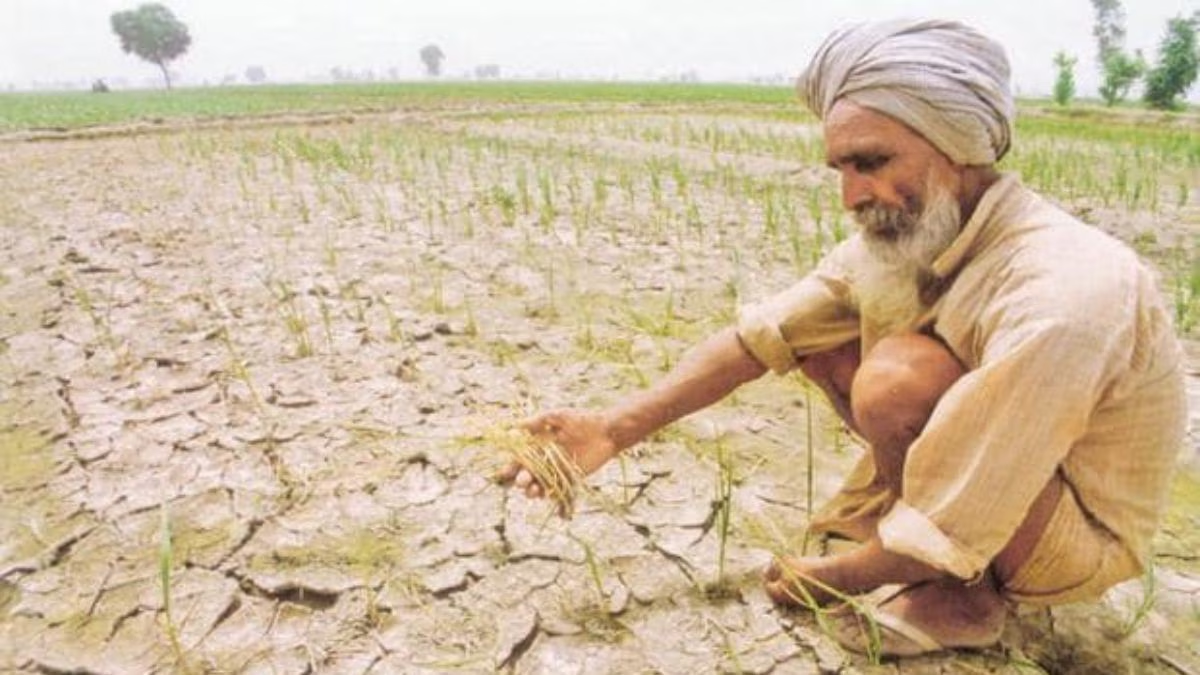
The period between the rabi harvest and the start of kharif sowing typically sees a slowdown in rural employment, often pushing up overall unemployment rates. Urban labour markets, however, generally remain relatively insulated from this seasonal trend.
Agrarian Distress
Agrarian distress severely inflates rural unemployment and underemployment. As agricultural viability declines due to climate impacts, market fluctuations, and land fragmentation, the surplus labour, which is historically absorbed by traditional farming, is forced into the unorganised non-farm sector. This results in severe joblessness, depressed wages, and mass distress-driven out-migration.
Dependency on Seasonal Agriculture
Heavy reliance on seasonal agriculture severely impacts rural employment by creating distinct peaks of high demand during sowing and harvesting, followed by long periods of involuntary unemployment during the off-season. This lack of year-round work causes unstable incomes, forces distress migration, and restricts rural economic growth.
Inadequate Labour Absorption
Inadequate labour absorption occurs when economic growth fails to generate enough jobs for the expanding workforce. In India, this results in severe disguised unemployment, rural wage stagnation, and mass distress-driven migration. As agriculture mechanizes and land sizes shrink, the surplus workforce is pushed into low-productivity, informal non-farm activities rather than higher-value industries.
Urban-Rural Divide
The challenges faced by rural youth extend beyond employment alone. Many struggle with poor infrastructure, limited access to higher education and a lack of reliable internet services. These shortcomings can affect their ability to acquire new skills, access information and compete for modern jobs. Urban youth, on the other hand, generally benefit from better facilities, stronger digital connectivity and a wider range of opportunities. As economies become increasingly technology-driven, bridging the gap between rural and urban areas has become crucial for ensuring inclusive development and empowering young people across the country.
Environmental Factors
Climate and environmental factors severely disrupt rural employment in India by undermining agricultural stability. Extreme weather events, such as prolonged droughts, floods, and severe heat stress, damage crop yields, reduce labour demand, and diminish off-farm incomes. This forces vulnerable populations into distress migration or lower-paying informal labour.